10 Low Iron Symptoms You Should Never Ignore
2026-03-16 / RG STONE HOSPITAL / Vitamins
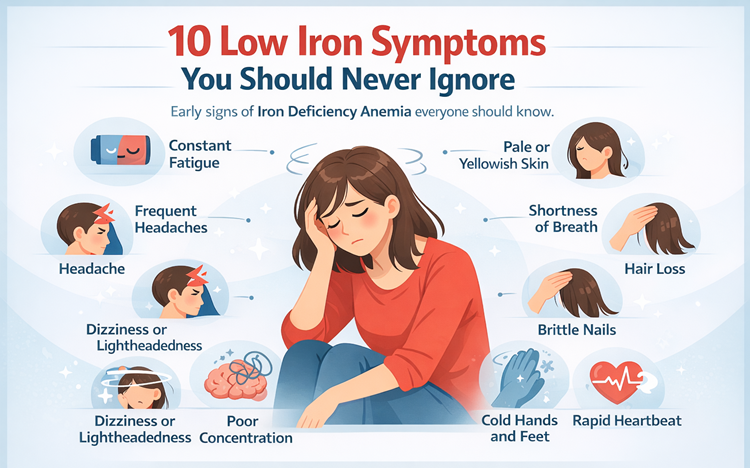
Low iron symptoms have a frustrating habit of blending into everyday life so seamlessly that most people dismiss them for months. Feeling tired? Probably a busy week. Looking pale? Maybe not enough sleep. That headache that keeps coming back? Stress, surely. Except sometimes it is none of those things. Sometimes it is your iron levels quietly dropping, and your body doing its best to wave a flag.
Why Iron Matters More Than People Realise
Iron is not a glittering mineral. It does not draw the same attention as calcium or vitamin D is likely to draw. However, it does one thing which is quite important and that is to transfer oxygen to all the parts of your body with the assistance of red blood cells. Inadequate supply of it causes that delivery system to break. The organs get insufficient oxygen as compared to the requirement, the body tries to push harder to compensate, and this is what precisely causes the symptoms that ensue.
It is sort of a running of a city half its power. Everything continues to run, though nothing works like it should and the stress starts to manifest itself in unlikely locations.
10 Low Iron Symptoms Worth Recognising
Low iron symptoms rarely arrive all at once. They tend to layer gradually, which is part of what makes them so easy to shrug off. Here are ten that clinicians most commonly see and that are most worth paying attention to.
-
Chronic Exhaustion: Not the type that is relieved by sleeping well. The fatigue of iron-deficiency lies in another way; it is more heavy, more persistent and more difficult to overcome. It becomes the initial symptom that people recognise and the final symptom that they associate with iron.
-
Unusual Paleness: Iron levels decrease and the Red blood cells are produced at a slower rate and the skin may turn pale especially in the face, gums and the inner eyelids. Whenever somebody informs you that you are pale and that you have not been sick, then it is worth remembering.
-
Shortness of Breath: You should not become out of breath when climbing one flight of stairs. Should it do so, and it did not formerly, impaired blood supply to the muscles may be a contributing factor.
-
Recurrent Headaches: a mild swelling of blood vessels in the brain occurs since the body attempts to compensate for a deficiency in oxygen as a result of iron deficiency. The outcome is a repetitive boring headache with no apparent cause.
-
Heart Palpitations: The heart labours more in case of poor oxygen delivery. The additional work may sometimes be experienced in the form of a flutter or irregular beat especially when one is physically active or when under stress.
-
Cold Hands and Feet: Low iron is usually accompanied by poor circulation. In case your extremities are always cold when it is hot outside, the lack of activity of red blood cells can be partially because of this.
-
Brittle Nails and Loss of Hair: Nails and follicles of hair require a good supply of oxygen in order to grow well. They tend to exhibit iron when it goes down. Nails will get brittle or rough and hair can shed excessively when they are washed or brushed.
-
Restless Legs at Night: This is a shock to people. It has been also found through research that an uncomfortable feeling to move the legs whenever there is rest, especially at night, is related to iron deficiency. It is more prevalent than many are aware.
-
Problem on Focusing: Brain fog does not necessarily relate to stress. When the brain does not get the amount of oxygen required, focus and mind clarity have a silent, but definite blow. Actions that were initially easy get to be very effort-laden.
-
Ice or Unusual Substances: A compulsive need to chew ice also known as pica is a well-established indicator of iron deficiency. Weird as it may be, when it is happening to you do not turn a blind eye.
Iron Deficiency Treatment Starts With the Right Test
Iron deficiency treatment works best when it is built on an accurate diagnosis, not a guess. Treatment beginning with a serum ferritin test alongside a full blood count gives clinicians the clearest view of actual iron stores, not just circulating levels. Without that baseline, supplementation can sometimes miss the mark entirely.
A woman in her late twenties came in reporting months of fatigue and heavy hair loss she had attributed entirely to stress. Her ferritin turned out to be critically low despite a diet she considered reasonably balanced. Three months into a structured supplementation plan alongside small dietary adjustments, her energy and hair health improved noticeably. Not overnight. Gradually, consistently. That is how iron recovery tends to work.
Treatment itself varies with severity. Mild deficiency is often managed through dietary changes and oral iron supplements. More significant deficiency may require intravenous iron infusion under clinical supervision.
Foods That Support Iron Levels Alongside Treatment
Diet has a significant supportive role in treatment and during the post treatment. The body best absorbs haem iron found in red meat, poultry, as well as fish. Lentils, spinach, tofu and fortified cereals contain non-haem iron which is not absorbed so easily but still counts so long as it is combined with vitamin C food such as amla, tomatoes, or citrus. Such a combination is a little, yet actually helpful habit to develop.
What diminishes absorption is as well to know. Foods rich in tea and milk that are taken too soon before meals rich in iron may affect the absorption of iron by the body.
When These Symptoms Need Proper Attention
If several of the symptoms above feel familiar and have persisted for more than a few weeks, a blood test is the sensible next step. It is quick, simple, and genuinely clarifying. The team at RG Hospitals can assess iron levels accurately and build a treatment plan that addresses the root cause, not just the surface symptoms.
Iron deficiency is common. It is also, in most cases, very treatable. The only thing that tends to make it worse is leaving it unaddressed for too long.
Categories
Hernia Repair
Appendicitis
Piles
Urological Treatment
Hernia treatment
Enlarged Prostate (BPH)
Gall Bladder Stone
Urinary / Kidney Stone
Vitamins
Indian Health Care System
Exercise
Obesity
Female Urinary Incontinence
Single Incision Laparoscopic Surgery (SILS)
Kidney Cancer
Bladder Cancer
Ovarian cancer
Nephrology
Bariatric Surgery
Kidney Function Test
Female Urology
Radiation Therapy
Alcoholic Fatty Liver
Liver disease
Gastroenterology
Kidney Disease
Nutrition & Health
Lung Cancer