10 Kidney Healthy Foods That Naturally Improve Kidney Function
2026-03-13 / RG STONE HOSPITAL / Kidney Stone
Kidney healthy foods are not some niche wellness trend reserved for people already in trouble. They matter for everyone, and most of them are nowhere near as complicated as a renal dietitian's chart might suggest. Your kidneys quietly filter your blood around two hundred times a day. That is a staggering workload for two fist-sized organs tucked behind your lower ribs, doing their job without a single complaint, until one day they cannot.
What you eat either helps carry that load or quietly adds to it.
Your Kidneys Work Harder Than You Think
The majority of the citizens do not give much thought to their kidneys until something goes wrong. That is understandable. The kidneys are not dramatic organs. It is not ruled out by them like the heart or the lungs. They simply filter, balance and silently control blood pressure and everyone else gets the credit.
The thing is that many years of foods containing high quantities of sodium and overabundance of protein and carbonated beverages and snacks of processed kind do add up. It is rather like pouring sand in a drain in a slow manner. It is not noticed until the drain begins to slow and then it is much more difficult to clear it than merely observing what was deposited.
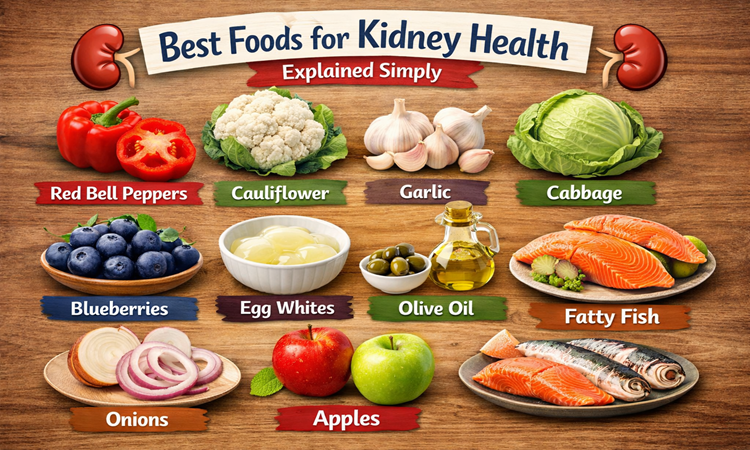
Best Foods for Kidney Health, Explained Simply
The best foods for kidney health are not necessarily the most glamorous ones. They tend to be low in potassium or phosphorus where needed, rich in natural antioxidants, and genuinely kind to the kidneys' daily filtering work. Here are ten that renal nutrition guidance keeps coming back to.
-
Red Bell Peppers: Low in potassium, high in vitamins C and B6, and colourful enough to make any meal look like it had effort put into it. They pull real weight without stressing the kidneys at all.
-
Cauliflower: Rich in folate, fibre, and compounds that help the body clear certain metabolic waste. It absorbs flavour beautifully too, which makes it surprisingly easy to actually eat regularly.
-
Garlic: This one matters more than people realise. It delivers enormous flavour without any sodium, which is important because salt is genuinely one of the kidneys' biggest daily burdens. Its anti-inflammatory properties are a quiet bonus on top of that.
-
Cabbage: Affordable, available everywhere in India, and packed with phytochemicals that may offer cellular protection (clinical review required). The fact that it works in everything from sabzi to soups does not hurt either.
-
Blueberries: Among the most antioxidant-rich fruits available, and relatively low in phosphorus too. They are the overachievers of the kidney-friendly food world.
-
Egg Whites: High-quality protein with noticeably less phosphorus than the yolk. For anyone who has been told to watch phosphorus intake, this small swap is genuinely practical and not as bland as it sounds once seasoned properly.
-
Olive Oil: Phosphorus-free, anti-inflammatory, and easy to incorporate. A modest daily use in cooking or dressings works well, without needing to completely overhaul how you cook.
-
Onions: Quietly useful. Low in potassium, a solid source of quercetin (a compound associated with reducing oxidative stress), and present in virtually every Indian dish already.
-
Apples: High in fibre, relatively low in potassium, and genuinely anti-inflammatory. One apple a day is not folklore. It just happens to be decent advice for kidney health too.
-
Fatty fish: Salmon, mackerel, or rohu provide omega-3 fatty acids that help manage blood pressure and reduce inflammation over time (clinical review required for specific serving recommendations). Two servings a week is a reasonable place to start.
Small Changes, Real Patterns
This is what is most significant in this list. All of these foods are prepared without the need to visit a specific store, elaborate ingredients and subscription fee. That is not an accident. The foods that are always healthy to the kidney are those that individuals are able to maintain.
Only two changes were made on the part of a middle-aged man who was dealing with early-stage kidney disease. He ceased to use packaged snacks and began to use the alternative of salt with garlic, jeera, and lemon. His markers of kidney functioning improved gradually but quantitatively over a number of months. Not dramatic. But real, and steady.
What to Pull Back On Gradually
Inclusion of these foods is more effective as long as the food items that always strain kidneys are minimised. The common culprits are excess sodium, red processed meat, dark colas and high phosphorus dairy. It is hardly realistic or necessary to cut them completely. However, the lessening of their frequency, every month, in months, does make a difference. The response of kidneys is pattern based, rather than meal based.
Getting the Right Guidance for Your Kidneys
Eating well is meanly supportive to the functioning of the kidney however, it does not replace the proper medical check-up particularly when damage has already taken place. In case you observe that you have constant swelling, not lifting fatigue, or a change in the frequency of peeing, then you should discuss with a clinician to assess the situation adequately. The Nephrology team at RG Hospitals does not follow standard checklists when offering dietary and treatment plans to patients with kidney conditions, but rather their own customised treatment based on the results of individual tests.
Categories
Hernia Repair
Appendicitis
Piles
Urological Treatment
Hernia treatment
Enlarged Prostate (BPH)
Gall Bladder Stone
Urinary / Kidney Stone
Vitamins
Indian Health Care System
Exercise
Obesity
Female Urinary Incontinence
Single Incision Laparoscopic Surgery (SILS)
Kidney Cancer
Bladder Cancer
Ovarian cancer
Nephrology
Bariatric Surgery
Kidney Function Test
Female Urology
Radiation Therapy
Alcoholic Fatty Liver
Liver disease
Gastroenterology
Kidney Disease
Nutrition & Health
Lung Cancer